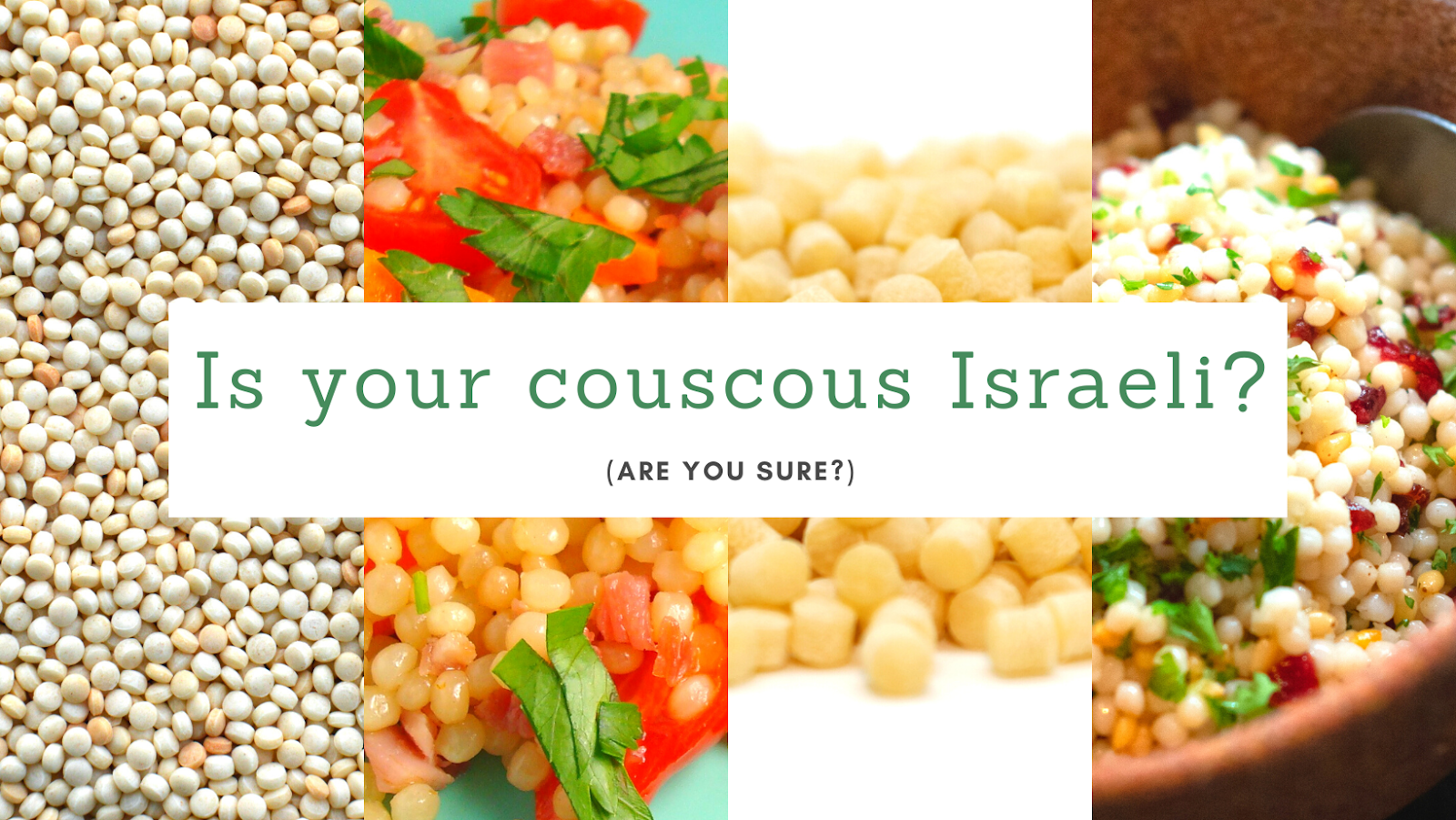
Last week, I happened to spot this item in our Israeli kids’ magazine. Don’t worry, I’ll translate it down below. Wallah? Amazing fact of the week In all kinds of places all over the world, they sell a food called “Israeli couscous,” which actually has no connection with couscous. It’s actually just פתיתים / petitim, which are indeed an Israeli invention from the 1950s. And we say to the world: Wait ‘till you discover the amazing thing we call Bissli Grill (BBQ flavour)! Of course, it’s not quite true that there’s NO connection with couscous. Both couscous and Israeli couscous (petitim, which just means “flakes”) are made from semolina flour and water. It’s just a matter of what you do with it from that point. The production process for “real” couscous involves adding water to the semolina flour, rolling it around (traditionally with your fingers, but these days, by machine), then run it through a sieve to get pieces of the right size. It ends...
One of the things I missed most when I started keep kosher was JELLO. Ooey, gooey, jiggly jello. Mmm, mmm, good. And totally, totally not kosher. A few years later, I discovered a REAL and delicious brand of kosher gelatin, which we used to buy often enough in Toronto to keep me happy. However, here in Israel, there’s no such thing, just the insipid brands of kosher jello, which are based on vegetable gel and don’t – in my limited experience – set up properly to a shiny crystal-clear texture. So I’ve started playing with real gelatin since we’ve been here, because it’s cheap and plentifully available – and, as I think I’ve commented before, mysteriously pareve. There are two kinds; the red package is meat-source and the blue is fish-source. From bad experience in Toronto, I’ve found that fish gelatin gives a weird tangy taste to everything you use it in. This would probably be fine in a citrus-themed dessert (as shown on the box), but defini...
If you didn’t know any better – like I didn’t when we first came here – you’d probably assume, with good reason, that both of these tins contained condensed milk: But that’s where you’d be wrong. Sure, at least at first glance, the Hebrew text is exactly the same: חלב מרוכז וממותק / chalav merukaz umemutak / concentrated sweetened milk. But the English is different, and therein lies the key difference between the two – the one on the right is FAKE. Here are the ingredients of the real thing (on the left): Milk (55%), sugar (45%). That’s it. Pure and simple. Now, here are the ingredients




I think it's a great idea to make tiny challas Friday night for the kids.
ReplyDeleteThey love it and it's fun.