If you didn’t know any better – like I didn’t when we first came here – you’d probably assume, with good reason, that both of these tins contained condensed milk: But that’s where you’d be wrong. Sure, at least at first glance, the Hebrew text is exactly the same: חלב מרוכז וממותק / chalav merukaz umemutak / concentrated sweetened milk. But the English is different, and therein lies the key difference between the two – the one on the right is FAKE. Here are the ingredients of the real thing (on the left): Milk (55%), sugar (45%). That’s it. Pure and simple. Now, here are the ingredients
Life really does get cooking at this time of year… kind of literally. I’m usually pulling out of my winter hibernation just in time for yom tov cooking/baking, first in a fun Purim way and then in a dead-serious Pesach way. This carnival is about all things kosher and cooking. If your blog is, too, or if you’ve blogged about kosher food on another blog, then you’re welcome to join us! Last month’s KCC was hosted by Batya at me-ander Next month’s KCC will be hosted… well, that’s TBD. (If you blog about food, why not step up?) For more information and an upcoming schedule, visit our facebook page So what’s doing in kosher food? What we’re eating First of all, with Pesach on the way, you should be inventorying your food and trying to use up what you’ve got. If you haven’t already, there’s still time to start, as Batya does at her blog me-ander in Pre-Passover Inventory Time . She says, “Sometimes I'm totally amazed at what h...
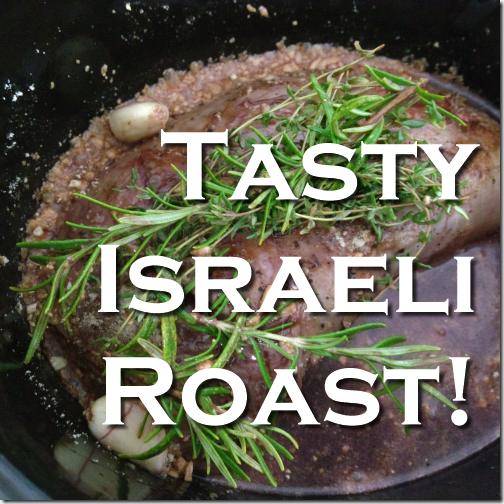
I wasn’t a big meat cook in Canada. We ate a lot of chicken, but I was kind of shy about beef. Still, I managed to make some acceptable roasts from time to time – meat that was tender enough and tasty enough that we could enjoy it together on special occasions. All that changed when we moved to Israel, where all the meat cuts are different from what I was used to and nothing, it seemed, was tender and tasty except the most expensive bits, like steak (which always seems to turn out tough when we make it at home, but we don’t mind because it’s delicious). But some of the English speakers here were chatting on our WhatsApp group last week about roasting beef, and it made me really want to try it again –even after having been burned numerous times. So on Thursday evening, we bought a nice little #6 roast, which according to this indispensible meat chart is called Fillet Medumeh (פילה מדומה), petit tender, or foreshank. The page's owner, Marc Gottlieb, says i...




Comments
Post a Comment
Okay, guys... I'm turning moderation OFF on all my blogs. I will be patrolling for spam, so play nice!